Category: Brenna Cline

  • The Lifelong Impact of Solo Travel: Two Global Education Experts Reveal How Solo Travel Transforms Career Paths

    The Lifelong Impact of Solo Travel: Two Global Education Experts Reveal How Solo Travel Transforms Career Paths

    Introduction

    Traveling abroad can be one of the most transformative experiences of a lifetime, offering opportunities for personal growth, cultural exchange, and self-discovery. But how can you make the most of your time abroad, especially when traveling solo? I spoke with Kim Eitner and Sarah Pearson, two Senior Global Education Program Coordinators at the University of Oregon, to explore how solo travel can impact personal and professional growth.

    Kim, experienced in European travel, has done everything from visiting friends studying abroad to living in a castle via a work exchange program. Sarah has lived and worked in Brazil, Mexico, and Chile, where she immersed herself in local communities and now supports students pursuing similar journeys.
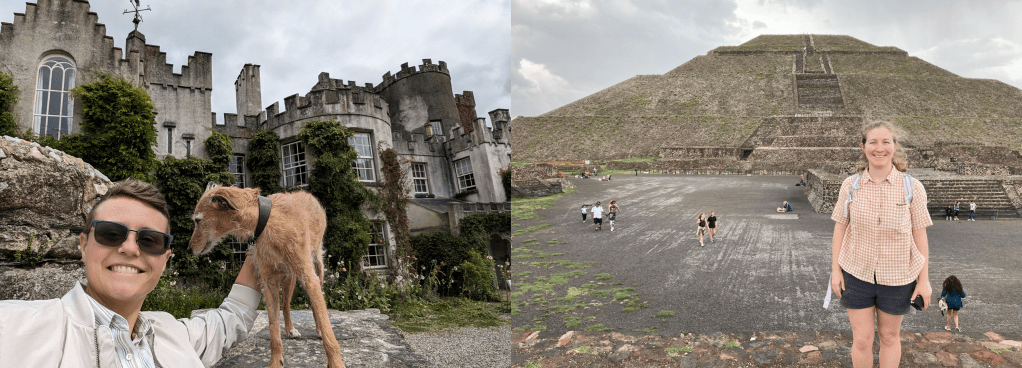
    Kim Eitner (left) In front of Huntington Castle, where she did her work exchange. Sarah Pearson (right) in Teotihuacán, Mexico

    How Solo Travel Shapes Your Career Skills and Aspirations

    Both Kim and Sarah emphasize that solo travel is more than just a personal adventure—it can also shape career aspirations and professional skills.

    Kim shares, “Solo travel is incredibly beneficial. It’s very eye-opening and helps you approach problems from different perspectives.” She notes that learning to navigate new environments makes travelers more adaptable and solution-oriented. These qualities are highly valued in any career path.

    Sarah echoes this sentiment, explaining that her own experiences abroad fueled her passion for global education. Solo travel, she argues, fosters cultural competence and a deeper understanding of global dynamics, skills that are invaluable in today’s interconnected world.

    Common Challenges Solo Travelers Face

    Despite its rewards, solo travel can be challenging. Sarah highlights one major obstacle: “A big hurdle is learning how a new system works.” Whether it’s public transportation, currency exchange, or local customs, solo travelers must quickly adapt to their surroundings.

    Another challenge, especially for students or first-time solo travelers, is managing expectations. Kim stresses the importance of balance: “It’s really easy to want to do everything. But part of solo travel is knowing when to slow down and take it all in.”

    Finding the Balance Between Spontaneity and Safety

    Safety is a common concern for solo travelers, but both Kim and Sarah stress that with preparation, risks can be minimized.

    Sarah suggests basic safety precautions, like traveling in groups at night and being aware of your surroundings. Kim adds that travelers should also understand local laws and customs. “For example, in many countries, items like mace aren’t allowed,” she says. “A self-defense class is a great idea.”

    Despite these precautions, both agree that being overly cautious can take away from the experience. “It’s fine to be spontaneous, but there’s also a lot of benefit in doing research and making the most of your visit,” Sarah advises.

    The Personal Growth That Comes from Solo Travel

    Solo travel fosters independence, adaptability, and confidence. “By traveling alone in Brazil, I learned local transportation systems and improved my sense of direction,” Sarah shared. “Sometimes I find myself relying on my fiancé, family, or friends with navigation. Solo traveling has made me more independent in that way.”

    Kim adds, “You make hundreds of micro-decisions daily—some work, some don’t—but you learn to trust yourself.” These skills of self-reliance and problem-solving apply to all aspects of life.

    Solo Exploring: Deeply Engaging with One City

    While solo travel often focuses on visiting multiple destinations, Sarah emphasizes the value of immersing yourself in one city. “People sometimes focus too much on traveling to as many places as possible and lose sight of all the amazing things to see in their own city,” she says.

    During her time in Londrina, Brazil, Sarah made a point of engaging with her local community. “I would go to local restaurants and businesses and start conversations with people. I even made a friend with a woman who worked at a clothing store because I was consistently exploring my neighborhood.” She also found a volunteer opportunity to teach English through a simple conversation with an Uber driver.

    Debunking the Biggest Misconceptions About Solo Travel

    Many people hesitate to travel alone due to common misconceptions. Kim and Sarah address some of the biggest myths:

    • From Sarah: “Solo travelers are loners.” “People think it’s lonely, but traveling alone can actually make it easier to meet locals and integrate into the culture,” Kim says.
    • From Kim: “It’s unsafe for women.” Kim clarifies, “It’s not inherently unsafe, but you do need to trust your gut and be aware of your surroundings.”
    • From Kim: “Solo travel is expensive.” “People think it’s expensive, but it can actually be very affordable—like using Workaway to live for free or staying in hostels,” Kim explains.

    Strategies for Making the Most of Solo Travel

    Sarah and Kim recommend the following tips to make the most of your solo adventure:

    • Embrace curiosity: Step into unfamiliar spaces and interact with locals. Small exchanges can lead to meaningful connections.
    • Prioritize safety: Research neighborhoods, trust your instincts, and inform someone of your whereabouts.
    • Take your time: Slow down and connect deeply with your surroundings. This enriches the experience.
    • Be open to spontaneity: Unplanned encounters often lead to the best memories, like Sarah’s chance conversation that led to a volunteer opportunity.

    Most Memorable Solo Travel Experiences

    For both Kim and Sarah, their most memorable experiences are shaped by the connections they made with people, not just the destinations.

    Sarah recalls, “It’s not about where you go—it’s the people you meet.” Kim also shared her experience in Ireland, staying in a castle through a work exchange program called Workaway. “I made a good friend there who I am still in touch with, and I even revisited the castle 11 years later.”

    Final Thoughts

    Solo travel offers unparalleled opportunities for growth, connection, and self-discovery. Whether hopping between destinations or immersing yourself in one city, stepping outside your comfort zone will enrich your journey. Sarah’s advice sums it up: “Solo exploring can lead to amazing relationships and experiences—you just have to be curious and open to the unexpected.”
  • Navigating Solo: Lessons from a First-Time Female Traveler in London

    Navigating Solo: Lessons from a First-Time Female Traveler in London

    Solo female travel can be one of the most rewarding experiences, offering independence, personal growth, and cultural exploration. However, it also comes with unique challenges, from navigating foreign transportation systems to ensuring personal safety.

    In this post, we explore the experiences of Brynn Pastore, a senior at the University of Oregon studying public relations, who embarked on her first major solo trip to London. From overcoming fears to handling safety concerns, her journey offers valuable lessons for any woman considering traveling alone.

    First-Time Travel Challenges

    One major insight from my interview with Brynn is that solo travel is always a learning experience. Throughout her trip, she faced challenges like navigating the Seattle airport for a long-haul flight, handling luggage on the metro, and reaching her destination safely.

    One of the toughest moments was arriving in London and having to hop directly from her flight to the Tube(London’s subway system) with all her luggage. She had missed the group’s planned travel time and had to figure out the metro system alone while staying mindful of her belongings. This gave Brynn immediate practice with thinking on her feet, a crucial skill for solo travelers.

    Staying Calm in Unfamiliar Situations

    Brynn also learned how to stay calm in unfamiliar situations. Solo travel often requires quick thinking and self-assurance. When asked how she managed stressful moments, she credited TikTok for providing valuable travel safety tips.

    Taking deep breaths, keeping a clear head, and focusing on one task at a time helped her navigate the experience. This is a great reminder that mental preparation—through research, social media, and personal affirmations—can be a powerful tool when traveling alone.

    Safety Strategies for Solo Travel

    Safety was a major focus throughout Brynn’s trip. Growing up with an overprotective mom, she developed strong awareness habits early on. She recalled moments of unease while taking the Tube alone, particularly when she felt watched. Trusting her instincts was key — if someone gave off an unsafe energy, she knew to be cautious.

    Some of Brynn’s top safety strategies included:

    • Staying constantly aware of her surroundings.
    • Making confident eye contact to deter unwanted attention.
    • Avoiding distractions, like using her phone while walking.
    • Keeping personal space to prevent pickpocketing.
    • Carrying self-defense tools, such as pepper spray (where legal).

    Combating Loneliness Abroad

    Solo travel can also feel isolating, especially when surrounded by strangers. At first, Brynn felt homesick and craved familiarity. But she quickly realized this challenge was an opportunity. By putting herself out there, she formed new friendships that made adjusting easier. Instead of overthinking social interactions, she embraced the mindset that anyone she met could be a future friend.

    Brynn’s Top Solo Travel Tips

    Being prepared for unexpected situations is key to staying safe while traveling alone. Here are some of her best tips:

    • Know local safety concerns: Research common scams or areas to avoid.
    • Have copies of important documents: Store digital and physical copies of your passport and ID.
    • Memorize an emergency contact’s number: This saved her when she accidentally dropped her phone into an Amsterdam canal.
    • Keep valuables secure: Avoid carrying all important items in one place.

    Final Thoughts

    Ultimately, Brynn’s journey shows that solo female travel builds confidence, resilience, and independence. By preparing ahead, staying alert, and embracing new experiences, she successfully navigated her adventure while prioritizing her safety.

  • From Data to Decisions: Infographics That Guide Solo Female Travelers

    From Data to Decisions: Infographics That Guide Solo Female Travelers

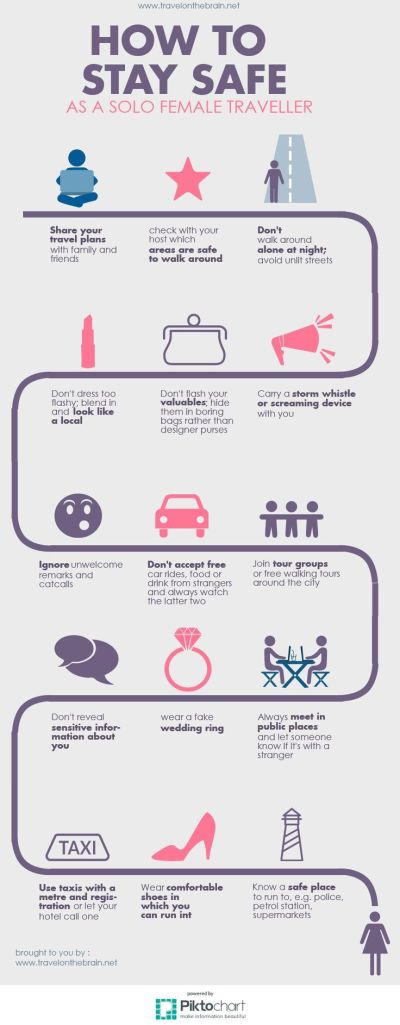
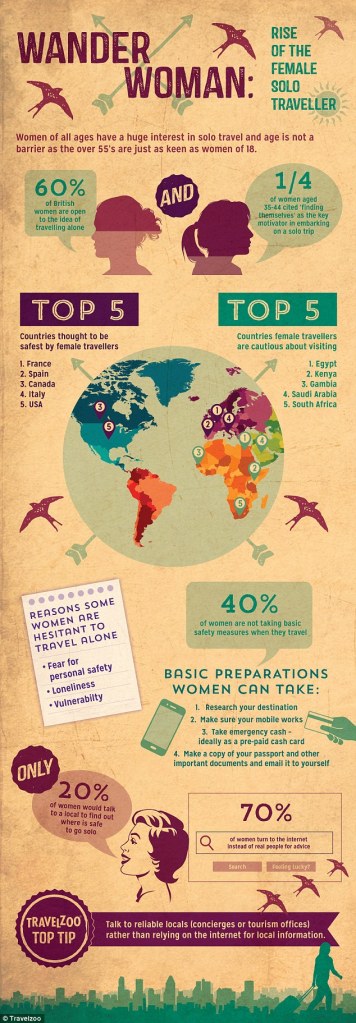
    Data helps us make decisions, especially about traveling solo as a female. However, data is often presented in an indigestible format. Infographics, visual representations of information, make data more readable by helping us see patterns. In this blog post, I will analyze a few infographics on solo female travel, highlighting what they did well and what could be improved.

    Each infographic presents complex information effectively through visual hierarchy, color choices, typography, a balance of text and visuals, and storytelling.

    A key strength of these infographics is their visual hierarchy. The first infographic (safety tips) follows a sequential path, making it easy to follow each tip. Icons and bolded text highlight key points, ensuring clarity. The second infographic (solo traveler motivations) is well-organized, presenting statistics in a digestible format. Using a pie chart for shared room preferences and bar charts for travel styles by age group makes data easy to compare. The third infographic (Wander Woman) uses maps, percentages, and icons to convey safety concerns and travel trends. Structured sections clearly separate key data points. This method makes the infographic visually appealing and easy to navigate. If I were to create an infographic, I would use this approach to enhance visual hierarchy.

    Color significantly impacts readability and engagement. The first infographic uses purples and pinks to create a calm and professional aesthetic, aligning with the theme of safety. The second infographic features bright, inviting colors like yellow and blue, evoking a sense of adventure and optimism. These colors align well with the theme of solo travel benefits. The third infographic uses an earthy, vintage-style palette, reinforcing the theme of travel history and female empowerment. All three contrast well with their backgrounds, making the information readable—something I would apply to my own infographic.

    Typography also plays an important role. These infographics use typography effectively to enhance clarity. The first infographic highlights key safety tips with bolded words, ensuring quick comprehension. The second infographic maintains a simple, consistent font style that enhances readability without unnecessary complexity. The third infographic uses vintage-style fonts that fit the theme while remaining legible. The third infographic’s font is the most visually interesting while still being readable. Typography is crucial in an infographic as it enhances readability, directs attention, and reinforces the overall visual structure. Well-chosen typography ensures key information stands out, making data easier to understand.

    A good infographic balances visuals and text. The first infographic uses icons to illustrate actions, such as a whistle representing a safety device, reducing text dependency. The second infographic blends illustrations and charts, keeping information engaging without overwhelming the reader. The third infographic incorporates maps, graphs, and pictograms to break down data, ensuring visual appeal while maintaining depth. This balance is crucial—too much text can overwhelm, while excessive visuals without explanation can be unclear. In my infographic, I would ensure both elements complement each other effectively.

    Finally, a strong infographic tells a clear story with data. The first infographic presents a step-by-step safety guide for solo travelers. The second infographic explains why people choose solo travel, making it relatable. The third infographic blends statistics, travel trends, and concerns, offering a well-rounded perspective on female solo travel. An infographic should do more than present facts—it should create a narrative that helps the viewer understand the significance of the data.

    These infographics effectively communicate travel-related information through thoughtful design. By incorporating strong visual hierarchy, strategic color use, readable typography, and a balance of visuals and text, they create engaging and informative content. I will apply these principles in my infographic to ensure clarity, engagement, and impact.

  • Budget-Friendly Solo Travel (Part 2): Saving Money on Transportation, Food & Activities

    Budget-Friendly Solo Travel (Part 2): Saving Money on Transportation, Food & Activities

    Once you arrive at your destination, staying on budget is all about making smart choices. From getting around efficiently to finding affordable meals and activities, there are plenty of ways to stretch your travel funds without missing out on amazing experiences. In Part One, we covered budgeting during the planning phase of your trip, including finding affordable flights, accommodations, and destinations. Now, in Part Two, we’ll focus on budget-friendly strategies for transportation, food, and activities so you can fully enjoy your solo adventure without overspending.

    Once you land at your destination, It’s important to know what your options are for affordable transportation. Public transportation like buses, metros, and trams is often the most affordable and efficient way to get around cities. For longer distances, budget airlines (such as Ryanair, AirAsia, or Spirit Airlines) and train passes (like Eurail or Japan Rail Pass) can help cut costs. Many cities also offer bike rentals or walking tours, which are not only free or low-cost but also a great way to explore. For flexible, shared rides, apps like BlaBlaCar connect travelers with drivers heading in the same direction, making long-distance travel more affordable.

    An influential part of traveling is experiencing the local flavors and cuisine, but eating out can add up quickly. Instead, opt for street food from local markets that offer delicious, authentic meals at a fraction of restaurant prices. If you do choose to eat out, many restaurants have lunch specials or set menus, which are often a good deal. There are also apps like Too Good To Go and Eatigo to help travelers find discounted meals from restaurants looking to sell surplus food.

    Finally, one of the most fun parts of traveling solo is getting to pick what activities you want to do. While this can be expensive, it does not have to be. Many cities offer free walking tours, where you can learn about local history and culture while tipping what you can afford. Also, museums and cultural sites often have free admission days or student discounts. You can also participate in outdoor activities like hiking, beach days, and exploring local markets to provide memorable experiences at little to no cost. Websites like Meetup can connect solo travelers with free social gatherings, workshops, and cultural experiences. Checking city tourism websites for free events and festivals is another great way to enjoy a destination without breaking the bank. 

    Solo travel doesn’t have to be expensive—it’s all about knowing where to find the best deals and making mindful spending choices. By using public transportation, seeking out affordable dining options, and taking advantage of free and low-cost activities, you can experience a destination to the fullest without breaking the bank. The key is to plan ahead, stay flexible, and embrace local experiences that don’t come with a hefty price tag. With these strategies, you can enjoy the freedom of solo travel while keeping your finances in check.

  • Budget-Friendly Solo Travel (Part 1): Planning & Saving Before Your Trip

    Budget-Friendly Solo Travel (Part 1): Planning & Saving Before Your Trip

    Traveling solo is an incredible experience, giving you the freedom to explore at your own pace, step outside your comfort zone, and fully immerse yourself in new cultures. However, without a travel companion to split the costs, solo travel can sometimes feel more expensive. The good news? With smart planning and a few budget-savvy strategies, you can make the most of your trip without overspending.  

    This two-part guide will help you navigate solo travel on a budget. Part One focuses on planning your budget before the trip—choosing affordable destinations, traveling at the right time, and finding budget-friendly flights and accommodations. Part Two will cover saving money on food, transportation, and activities while on the road. Whether you’re a seasoned solo traveler or planning your first trip alone, these tips will help you explore the world without breaking the bank.

    It’s important to spend time budgeting and planning before the trip. Some strategies for this stage include choosing an appropriate time to travel, setting a realistic travel budget, using budget travel apps, and looking for affordable destinations. Some resources for researching the prices of things in different destinations are BudgetYourTrip and Nomadic Matt. According to Forbes, some of the cheapest destinations to visit in 2024 were Hoi An, Vietnam; Cape Town, South Africa; and Mombasa, Kenya. 

    Some resources for finding affordable times to travel are Google Flights Explore, Skyscanner’s “Cheapest Month” Feature, and Kayak’s Best Time to Travel Tool. Once you know where you want to go and when, it’s time to start setting a realistic travel budget. You should plan out how much money you will spend on daily expenses, transportation, accommodations, food, and activities. Some good apps for planning your travel budget are Trabee Pocket, Tripcoin, and TravelSpend. While planning your travel budget starts before the trip, it is also an ongoing process throughout the trip as you get a better sense of your actual spending. Apps like the ones I provided are helpful because they will help you adjust in real-time.

    The next thing to think about is finding affordable flights and accommodations. Staying in a hostel or guest house is a great way to save money on accommodations. HostelWorld is a great starting point, offering a database of over 34,000 hostels worldwide. You can search by city and travel dates or explore top-rated hostels and popular destinations to find the best fit for your trip. Booking.com is also an option. They have many options to filter your search by, including a 9.0 plus rating filter. 

    Finding affordable flights is key to budget-friendly solo travel. Start by using search engines like Google Flights, Skyscanner, and Kayak to compare prices and track fare drops. Booking in advance, being flexible with travel dates, and flying during off-peak seasons can help secure lower prices. Consider budget airlines, but always check for extra fees on baggage and seat selection. Using airline rewards programs or travel credit cards can also help you save on flights through points and miles.

    Budgeting for solo travel doesn’t stop once you book your flight and accommodations—it’s an ongoing process that requires flexibility and smart decision-making. By researching affordable destinations, planning your travel budget in advance, and using the right tools to find cheap flights and stays, you can significantly cut costs without sacrificing incredible experiences.

    In Part Two, we’ll dive into strategies for saving money while traveling, from eating affordably to finding free and low-cost activities. With the right approach, solo travel doesn’t have to be expensive—it just takes a little planning and creativity to make the most of every dollar.

  • Solo, But Not Lonely: A Female Traveler’s Guide to Meaningful Connections Abroad

    Solo, But Not Lonely: A Female Traveler’s Guide to Meaningful Connections Abroad

    Loneliness is a problem that can sneak up on many solo travelers throughout their Journey. Your first instinct may be to ignore these emotions, but it is better to recognize these feelings so you can find a way to get through them. Solo travel is about experiencing new things, and this may come with new feelings as well. This post will focus on strategies that you can use to overcome the loneliness that may creep in while solo traveling. Some strategies include engaging with locals, staying in social accommodations, joining group activities and social events, and using travel apps for connection.

    A great way to engage with locals while solo traveling is staying in locally run accommodations like Airbnbs, homestays, and hostels. Accommodations like these offer a warmer, more personal experience compared to large chain hotels. Hosts may engage in conversation, offer local insights, and even introduce travelers to their community. It might be a good idea to stay with a female host for a greater sense of safety, comfort, and understanding, especially in unfamiliar cultures. They may be able to relate to your experiences more and potentially give insights specific to women’s travel concerns.

    Another great way to engage with locals is to participate in local experiences & tours through platforms like Airbnb Experiences or GetYourGuide. These platforms provide a wide range of unique activities that make it easy to meet locals and fellow travelers in a structured, engaging setting. Experiences are also usually led by a local guide, which offers a chance to engage with residents in a meaningful way. GetYourGuide provides a selection of women-only experiences designed to create a safe, comfortable, and empowering environment for female travelers. These tours can be particularly beneficial for solo female travelers who want to connect with other women while exploring a new destination. Finally, learning a few phrases in the local language to spark conversations is never a bad idea.

    Another great way to conquer loneliness while solo traveling is by joining group activities and social events. As mentioned previously, GetYourGuide is a great resource for this, but if you aren’t looking for a super structured activity you can find local meetups on Meetup.com, Couchsurfing Hangouts, and Facebook travel groups. Meetups provide opportunities to connect with locals and other travelers in a casual, friendly setting. Whether it’s through organized events, language exchanges, social meals, or hobby-based groups, meetups allow solo travelers to form meaningful connections while exploring a new destination. Meetup.com offers women-only groups in cities worldwide which can provide an increased sense of safety and community, tailored experiences for women, and local female insights.

    Volunteering while traveling is a powerful way to give back to local communities while also forming meaningful connections by engaging with locals in a purposeful way. Platforms like Workaway and WWOOF connect travelers with volunteer opportunities worldwide, often providing free accommodation and meals in exchange for work. Not only does this combat loneliness, but it also fosters a deeper cultural exchange, making the travel experience even more rewarding.

    Finally, there are many apps that make it easier for solo travelers to meet new people, find social events, and connect with locals. Apps like Tourlina cater specifically to women looking for female travel companions, creating a safe and trusted network. Platforms like Bumble (for friends) allows solo female travelers to connect with other women for friendship, networking, and shared experiences. For some solo travelers, eating alone constantly might be the source of their loneliness. Apps like Eatwith and BonAppetour can help with this by providing opportunities to share meals with locals and fellow travelers, turning dining into a social experience. By using these apps, female solo travelers can stay socially engaged, make new friends, and create memorable experiences on your journey.

    Loneliness is a normal part of solo travel, but it does not have to define your experience. By engaging in some of the strategies I mentioned, you can turn moments of solitude into opportunities for meaningful connections. However, it is equally important to embrace independence because solo travel is about self-discovery, personal growth, and stepping outside your comfort zone. I suggest trying a mix of social and solo activities for a balanced experience. It may take some time to reach the proper balance, but be patient with yourself, give yourself the flexibility to adjust and grow, and know that feelings of loneliness are not permanent. They can actually contribute to your growth as a solo traveler.

  • Beyond the Booking: How Airbnb’s $100M Fund Supports Women’s Safety in Europe

    Beyond the Booking: How Airbnb’s $100M Fund Supports Women’s Safety in Europe

    We hear the term CSR thrown around all the time, but what does it really mean? CSR stands for corporate social responsibility and refers to a company’s commitment to ethical practices, sustainability, and social impact. It’s how they go beyond profit-making to positively affect society.

    Since this blog is about solo female travel, I took a deep dive into one of Airbnb’s CSR initiatives that ties to this theme. In November 2024, Airbnb shared that they will be funding specialist organizations to support women and children at risk of abuse across countries in Europe. The funding will be from the Airbnb Community Fund, which will distribute $100 million USD by the end of 2030. This campaign is particularly relevant to solo female travelers, as it addresses safety and support for women facing gender-based violence, an issue that can impact women traveling alone.

    Airbnb announced an initiative on November 25th, The United Nations International Day for the Elimination of Violence against Women. The initiative comes at a time when there is systemic underfunding of these specialist services, leaving them unable to meet the demands for their support. Airbnb has donated over $1.7 million to organizations across Europe working to end gender-based violence and abuse since 2021. Funding went to organizations in Italy, the UK, Ireland, Spain, and Germany. They carried out a similar initiative in November 2022.

    One communication strategy that Airbnb used to promote this campaign was a blog post which is where I got most of my information about the campaign. On this blog post, there are buttons to post about the initiative on x, Facebook, LinkedIn, Pinterest, or copy the link. This is a smart move because it makes it easy for readers to share Airbnb’s initiative which will drive awareness to the company and the problem they are trying to solve.

    There was not much communication from Airbnb about the initiative, but some people who were involved in the initiative posted on LinkedIn about it. One member of the Host Advisory Board posted about selecting La Grande Casa as one of the beneficiaries. A director of policy strategy at airbnb, as well as a public policy and government relations employee also posted about the initiative. There was a little bit of news coverage from an online British newspaper about Airbnb’s partnership with Womens Aid.

    There was also some influencer marketing involved in the communication of this initiative. An Irish singer-songwriter, Lyra, is a brand ambassador for one of the beneficiaries, Safe Ireland. In an article published in the Irish Times, Lyra was connected with the Safe Ireland and Airbnb “Safe Home, Safe Pathways” campaign. Safe Ireland also had some press releases about their partnership with Airbnb, but these were all in reaction to the first edition of the initiative back in November 2022.

    Lyra pictured on King Street Dublin to Launch Safe Ireland’s Safe Home, Safe Pathways campaign. Photograph: Leon Farrell/Photocall Ireland

    Airbnb also involved its host advisory board in the initiative. The Airbnb host advisory board is a “diverse group of hosts on Airbnb who meet regularly with Airbnb executives to represent the host community’s voice and make sure that hosts’ ideas are heard.” Members of the board were allowed to nominate organizations to receive donations from the community fund, and they identified ending abuse and exploitation as a priority.

    This campaign aligns well with Airbnb’s values of community, connection and, belonging. They want to make sure that their stakeholders feel like they can belong anywhere, which they do by ensuring that accommodations remain a safe space for all travelers, including women and children at risk. What’s more, they are making a real-world impact beyond financial contributions through focusing on providing safe housing for survivors. This initiative is a great way for Airbnb to directly connect its platform to its CSR mission.

    The emphasis on safety and community support throughout the initiative resonates with solo female travelers and reinforces Airbnb’s dedication to providing secure accommodations. However, the communication channels used for this initiative were somewhat limited.

    While Airbnb’s blog post effectively outlined the campaign’s objectives and provided social sharing options, there was not much communication beyond their owned media channels. The initiative received minimal press coverage, and although some Airbnb executives and host advisory board members posted about it on LinkedIn, there was little engagement on mainstream social media platforms like Facebook, X, and Instagram.

    I think the involvement of influencer marketing was a good touch, but it was not strongly leveraged and was only connected with one of the beneficiaries and not so much Airbnb. I think having more of this would have driven engagement and awareness. Perhaps they could have partnered with some female travel influencers or other important public figures in the areas of the beneficiaries.

    Additionally, it would have been nice to see updates on the impact of the donations, such as success stories from beneficiaries. This would further reinforce Airbnb’s long-term commitment to the cause and build trust among its community. Finally, It was a smart move to integrate the host Advisory Board because it not only engaged the host community but also reinforced the idea that Airbnb’s commitment to social impact is driven by those who use the platform.

    By refining its communication strategy and using more diverse channels, Airbnb can maximize the impact of its CSR initiatives and continue to position itself as a leader in driving meaningful social change.

  • Plan, Protect, and Explore: A Safety Guide for Female Solo Travelers

    Plan, Protect, and Explore: A Safety Guide for Female Solo Travelers

    Solo travel is the ultimate freedom—but how do you stay safe while embracing the adventure? Solo travel can be both empowering and intimidating, but with the right precautions, it can be a safe and rewarding experience. This post will touch on points such as researching the safety of destinations, tech tools, and cultural considerations. 

    According to a 2024 Solo Female Travel Trends Survey, 70% of respondents worry about their safety when traveling solo. Something that can be done to alleviate this anxiety is researching the safety of destinations before planning your trip. The first step in this process is thinking about what safety means to you. Some important safety aspects for you might be low crime rates (especially against women) or positive attitudes towards women. Keep your chosen aspects in mind as you do your research. 

    One important resource to pay attention to is travel advisories (U.S. travel advisories can be found here). Travel advisories provide up-to-date information on potential risks in a destination and highlight safety concerns such as crime rates, political instability, natural disasters, and health risks. Staying informed on these risks can help you make decisions about where to go. 

    Another tip for evaluating the safety of a destination is to look at crime rates, especially regarding crime against women. OSAC (Overseas Security Advisory Council) Crime Reports are a good tool for assessing crime rates in different countries. OSAC provides reliable, up-to-date security information from the U.S. government by facilitating a two-way exchange between government officials and private-sector security professionals abroad. You can search different countries and get detailed information about crime trends (theft, scams, assaults), civil unrest, political instability, and common risks for travelers (including women-specific concerns).

    It is also important to research local attitudes towards women. Search local and international news outlets, like BBC, for recent stories on women’s safety. Social media forums, such as Reddit or Facebook, can be a helpful tool to get a sense of how women are treated in certain destinations because you can read about people’s firsthand experiences. Taking a look at local women’s rights organizations’ websites can also provide a lot of insight. These organizations may highlight issues such as harassment, discrimination, or unsafe areas for women. This is a great way to get a clearer picture of potential concerns that may not be covered in mainstream travel guides or news media. 

    Another important thing to research is local customs and appropriate dress. It is crucial to be aware of these aspects in many destinations, especially for women solo travelers. Lonely Planet has comprehensive travel guides that include cultural etiquette, dress codes, and tips for women traveling in specific regions. You can often find detailed sections on cultural sensitivities and societal norms. Similarly to assessing local attitudes towards women, Reddit and Facebook forums can also provide insight into customs and appropriate dress. The discussions on these forums allow for real-time, peer-shared advice on cultural considerations, challenges, and gender-based travel tips. 

    Moving away from research, it’s also important to be aware of apps and tools that can help protect you while traveling solo. Apps like bSafe allow you to send alerts to friends and family with your location. Google Maps offline mode ensures you never get lost, even without Wi-Fi. If you’re traveling to more remote areas, apps like TripWhistle Global SOS provide emergency numbers for police, medical assistance, and embassies across the globe, giving you peace of mind no matter where you are. There are also several apps that can help make your solo travel journey easier and more pleasurable. Check out this list from Wired!

    While being cautious when solo traveling is important, don’t let it take away from the joy and excitement of exploring new places. Solo travel is a truly transformative experience, and by researching the safety destinations, using the right tech tools, and staying aware of local customs, you’ll be equipped to make the most of your adventures. Most importantly, remember that safety and empowerment go hand in hand. 

  • Solo Female Travel Gets an Empowering Upgrade: Supporting Women-Led Businesses Worldwide

    Solo Female Travel Gets an Empowering Upgrade: Supporting Women-Led Businesses Worldwide

    Solo traveling is an empowering experience in and of itself, but doing it in a way that supports women-led initiatives can make it even more impactful. In the past few years, there has been a growing trend of female travelers seeking ethical and impactful travel experiences. A 2023 survey by The Harris Poll found that 88% of women believe travel companies should ensure their offerings positively impact local communities. 82% of women said they wished there were more authentic travel experiences that allowed them to connect to the local culture. Intrepid Travel and the Intrepid Foundation have responded to this desire by offering women-led trips and supporting grassroots initiatives that uplift local women around the world.

    Currently, the Intrepid Foundation is partnered with eight different organizations that support women and girls in many different countries, and 50 organizations total. The organizations they support protect the environment, address inequalities, support local communities, and help with natural disaster relief. They ensure that 100% of donations go directly to the partners they support by covering the administration fees. There mission is “to create positive impact through the joy of travel, community and connection”

    Intrepid’s women-led trips offer the opportunity for women to take part in experiences that may not be possible in mixed gender groups or alone. More than that, they break down the cultural barriers of traditional tourism. A big part of Intrepid’s women-led trips is supporting female-led businesses. For example, they have a women-led trip to turkey where women will get to take part in several female-led experiences such as fortune telling lessons, carpet weaving lessons, cooking classes, dinners, felt making, doll making, and more. This is a great example of challenging traditional tourism structures, which usually focus on mass tourism, large tour groups, and a standardized, sometimes commercialized experience.

    Being in a group of only women will allow participants to have authentic interactions with local women that may not be acceptable around men. These trips also provide employment opportunities for women as local guides. There are many parts of the world where tourism is dominated by men due to societal norms. In these locations, Intrepid has doubled the number of women leading their trips in recent years.

    Key Details About Intrepid Women-led Trips
    – Small group travel (average of 10 women)
    – Led by local female guides who offer deeper cultural insights
    – Safety-first approach: your safety is their biggest priority

    Some Top Destinations to Support Women-led Businesses
    Turkey: Participate in several lessons led by female artisans who practice traditional crafts and skills
    India (Rajasthan): Engage in hands-on workshops with expert artisans exploring traditional textile techniques, natural dyeing, and block printing while immersing in the rich cultural heritage of India.
    Nepal: Hike through the Annapurna region, explore local villages, and visit Buddhist monasteries, all while supporting women-led businesses like a cooking school empowering marginalized women and a guesthouse promoting female entrepreneurship through adventure tourism.
    Morocco: Hike through stunning landscapes, learn traditional crafts like couscous-making and weaving from local women, and experience traditional music performances by The Houariyates, a female band.
    Saudi Arabia: Explore dramatic landscapes, learn about local history, and support women-led businesses, including a citrus farm run by two sisters, a cooking school, and a pottery workshop.
    Pakistan: Explore vibrant cities and ancient mountain villages while supporting women’s empowerment projects, trekking through stunning landscapes and participating in cooking classes and village visits led by trailblazing local women.

    In addition to being a source of independence and self-confidence, solo female travel can be a force for good when combined with supporting women-led initiatives around the world. Intrepid gives women the opportunity to support these initiatives while immersing themselves in cultures, learning new skills, and fostering authentic connections with local women. Intrepid’s women-led trips challenge traditional tourism structures, which in turn, leads to more authentic travel experiences. They focus on supporting local economies, empowering women, and engaging in practices that foster cultural exchange and community development. Overall, they offer a more responsible, ethical way to experience the world while benefiting local communities and environments.

    So if you are a female solo traveler who is planning your next trip, consider a journey that supports both your growth and the growth of women across the globe. Just imagine the amplified impact you can make and feel when you travel with purpose!

  • The Transformative Power of Solo Travel: A Guide for Young Women

    The Transformative Power of Solo Travel: A Guide for Young Women

    It’s time for young women to experience the freedom, empowerment, and self-discovery that can come from solo travel. Exploring the world on your own terms is an incredible journey and something that every young woman should do if they can. Despite this, many women feel discouraged because of fear and uncertainty. My blog will aim to change this by giving young women a space to gain the knowledge, tools, and confidence they need to embrace solo travel safely and successfully.

    Solo travel can be a transformative experience that teaches self-reliance, Independence, people skills, organization skills, and so much more. It goes far beyond booking flights and accommodations, it’s about embracing your journey and taking control of your adventures. This is exactly why solo travel can enhance your self-confidence and do wonders for your self-esteem. With all that being said, there’s a lot of moving parts. There are safety concerns, logistical questions, and much more to navigate. This blog will address the unique challenges that young women face when solo traveling. It will also talk about opportunities for young female solo travelers. Overall, it will be a resource hub for young women who aspire to solo travel but still have reservations.

    I have seen firsthand how life-changing solo travel can be. It’s not just the destinations that make it this way, it’s the lessons you learn about yourself along the way. The unique challenges that young women can face along their journeys, from safety concerns to societal expectations, were quite daunting to me when I was planning my journey. I want to ease that anxiety by creating a resource that empowers young women to take a leap and solo travel with the tools and knowledge they need.

    Each week, you will find two posts here on the blog page of my website. In the coming weeks, I will be writing about topics such as:
    Safety Tips: Best practices for staying safe while traveling alone.
    Destination Insights: Information on destinations that appeal to and are safe for young women.
    Travel Hacks: How to pack light, save money, and find the best travel deals.
    Expert Advice: Stories and advice from seasoned travelers and industry experts.
    Tools and Resources: A curated list of apps, nonprofits, and companies that support solo female travelers.

    My goal is to make this blog your go-to guide for embracing solo travel confidently and responsibly. I also want to build a community where young women can feel empowered to step out of their comfort zones, explore the world, and support one another on their journeys. Solo travel changed my perspective on life, and I hope this blog inspires you to take the leap and discover its transformative power as well.

    Eager to get a head start on some tips and tricks? Check out this article from Condé Nast Traveler about “The Golden Rules of Solo Travel.”