Introduction
Traveling abroad can be one of the most transformative experiences of a lifetime, offering opportunities for personal growth, cultural exchange, and self-discovery. But how can you make the most of your time abroad, especially when traveling solo? I spoke with Kim Eitner and Sarah Pearson, two Senior Global Education Program Coordinators at the University of Oregon, to explore how solo travel can impact personal and professional growth.
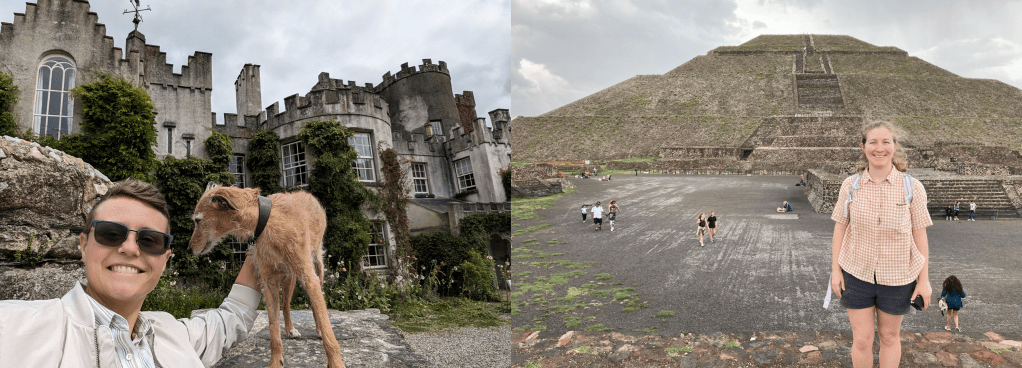
Kim, experienced in European travel, has done everything from visiting friends studying abroad to living in a castle via a work exchange program. Sarah has lived and worked in Brazil, Mexico, and Chile, where she immersed herself in local communities and now supports students pursuing similar journeys.
How Solo Travel Shapes Your Career Skills and Aspirations
Both Kim and Sarah emphasize that solo travel is more than just a personal adventure—it can also shape career aspirations and professional skills.
Kim shares, “Solo travel is incredibly beneficial. It’s very eye-opening and helps you approach problems from different perspectives.” She notes that learning to navigate new environments makes travelers more adaptable and solution-oriented. These qualities are highly valued in any career path.
Sarah echoes this sentiment, explaining that her own experiences abroad fueled her passion for global education. Solo travel, she argues, fosters cultural competence and a deeper understanding of global dynamics, skills that are invaluable in today’s interconnected world.
Common Challenges Solo Travelers Face
Despite its rewards, solo travel can be challenging. Sarah highlights one major obstacle: “A big hurdle is learning how a new system works.” Whether it’s public transportation, currency exchange, or local customs, solo travelers must quickly adapt to their surroundings.
Another challenge, especially for students or first-time solo travelers, is managing expectations. Kim stresses the importance of balance: “It’s really easy to want to do everything. But part of solo travel is knowing when to slow down and take it all in.”
Finding the Balance Between Spontaneity and Safety
Safety is a common concern for solo travelers, but both Kim and Sarah stress that with preparation, risks can be minimized.
Sarah suggests basic safety precautions, like traveling in groups at night and being aware of your surroundings. Kim adds that travelers should also understand local laws and customs. “For example, in many countries, items like mace aren’t allowed,” she says. “A self-defense class is a great idea.”
Despite these precautions, both agree that being overly cautious can take away from the experience. “It’s fine to be spontaneous, but there’s also a lot of benefit in doing research and making the most of your visit,” Sarah advises.
The Personal Growth That Comes from Solo Travel
Solo travel fosters independence, adaptability, and confidence. “By traveling alone in Brazil, I learned local transportation systems and improved my sense of direction,” Sarah shared. “Sometimes I find myself relying on my fiancé, family, or friends with navigation. Solo traveling has made me more independent in that way.”
Kim adds, “You make hundreds of micro-decisions daily—some work, some don’t—but you learn to trust yourself.” These skills of self-reliance and problem-solving apply to all aspects of life.
Solo Exploring: Deeply Engaging with One City
While solo travel often focuses on visiting multiple destinations, Sarah emphasizes the value of immersing yourself in one city. “People sometimes focus too much on traveling to as many places as possible and lose sight of all the amazing things to see in their own city,” she says.
During her time in Londrina, Brazil, Sarah made a point of engaging with her local community. “I would go to local restaurants and businesses and start conversations with people. I even made a friend with a woman who worked at a clothing store because I was consistently exploring my neighborhood.” She also found a volunteer opportunity to teach English through a simple conversation with an Uber driver.
Debunking the Biggest Misconceptions About Solo Travel
Many people hesitate to travel alone due to common misconceptions. Kim and Sarah address some of the biggest myths:
- From Sarah: “Solo travelers are loners.” “People think it’s lonely, but traveling alone can actually make it easier to meet locals and integrate into the culture,” Kim says.
- From Kim: “It’s unsafe for women.” Kim clarifies, “It’s not inherently unsafe, but you do need to trust your gut and be aware of your surroundings.”
- From Kim: “Solo travel is expensive.” “People think it’s expensive, but it can actually be very affordable—like using Workaway to live for free or staying in hostels,” Kim explains.
Strategies for Making the Most of Solo Travel
Sarah and Kim recommend the following tips to make the most of your solo adventure:
- Embrace curiosity: Step into unfamiliar spaces and interact with locals. Small exchanges can lead to meaningful connections.
- Prioritize safety: Research neighborhoods, trust your instincts, and inform someone of your whereabouts.
- Take your time: Slow down and connect deeply with your surroundings. This enriches the experience.
- Be open to spontaneity: Unplanned encounters often lead to the best memories, like Sarah’s chance conversation that led to a volunteer opportunity.
Most Memorable Solo Travel Experiences
For both Kim and Sarah, their most memorable experiences are shaped by the connections they made with people, not just the destinations.
Sarah recalls, “It’s not about where you go—it’s the people you meet.” Kim also shared her experience in Ireland, staying in a castle through a work exchange program called Workaway. “I made a good friend there who I am still in touch with, and I even revisited the castle 11 years later.”
Final Thoughts
Solo travel offers unparalleled opportunities for growth, connection, and self-discovery. Whether hopping between destinations or immersing yourself in one city, stepping outside your comfort zone will enrich your journey. Sarah’s advice sums it up: “Solo exploring can lead to amazing relationships and experiences—you just have to be curious and open to the unexpected.”



 Brenna Cline